


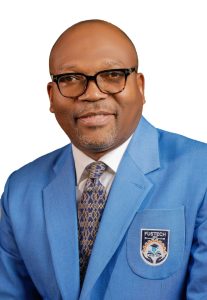
Lagostrend report that the Vice-Chancellor of the Federal University of Science and Technology (FUSTECH), Epe, Lagos State, Prof. Kazeem Oshikoya, has described President Bola Tinubu’s economic reforms as challenging but necessary steps towards achieving sustainable economic growth and national prosperity.
Oshikoya made this known in an interview with the News Agency of Nigeria (NAN) in Lagos on Saturday, noting that although the policies had imposed temporary economic difficulties on Nigerians, they were aimed at addressing longstanding structural challenges and repositioning the country for long-term development.
He particularly identified the removal of fuel subsidy as a difficult but necessary decision, expressing optimism that its benefits would gradually translate into improved economic stability, increased investment and sustainable development.
According to him, the growing interest of foreign investors in Nigeria suggests renewed confidence in the country’s economic prospects and its capacity to achieve recovery.
“Economic reforms are not always comfortable, particularly at their initial stages. However, difficult decisions are sometimes necessary to reposition a nation for sustainable growth and prosperity.
“President Tinubu’s decision to remove fuel subsidy may have been harsh, but it was a necessary step towards addressing some of the structural challenges confronting the Nigerian economy,” he said.
The vice-chancellor expressed optimism that the prices of food and other essential commodities would become more affordable as the benefits of the ongoing reforms continued to emerge.
He, however, stressed the importance of ensuring that economic gains translated into tangible improvements in the living conditions of ordinary Nigerians.
On education, Oshikoya said the establishment of additional universities and the expansion of access to higher education were important developments that could strengthen human capital and accelerate national transformation.
He explained that the expansion of university education would create more employment opportunities for academic and non-academic staff while providing more Nigerian youths with opportunities to pursue their educational aspirations.

“Education remains a major instrument for human capital development, innovation and national transformation,” he said.
Oshikoya urged Nigerians to exercise patience and support policies capable of delivering sustainable national development, while calling on the Federal Government to remain committed to effective implementation and accountability.
He also emphasised the need for sustained investment in critical sectors, particularly infrastructure, education, agriculture and technology, to strengthen Nigeria’s productive capacity, create employment and improve citizens’ standard of living.
“There is light at the end of the tunnel. What is important now is for the government to remain focused, address areas of concern and ensure that the benefits of economic reforms reach ordinary Nigerians.
“With sustained commitment, transparency and effective implementation, Nigeria can overcome its present challenges and emerge as a stronger and more prosperous nation,” he said.
On the political outlook, the FUSTECH vice-chancellor expressed confidence that a second term for President Tinubu would provide an opportunity to consolidate ongoing reforms and complete some of the administration’s economic programmes.
He noted that continuity in governance, when supported by improved policy implementation, transparency and accountability, could strengthen economic stability and accelerate national development.
Oshikoya, however, maintained that the ultimate measure of the success of the reforms would be their impact on citizens’ welfare, purchasing power, job creation and access to economic opportunities.
He said government policies must ultimately translate into improved living standards and a better future for Nigerians.
Discover more from
Subscribe to get the latest posts sent to your email.