


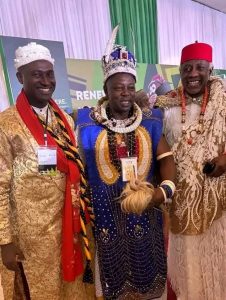
The attention of stakeholders across Igbo land has been drawn to ongoing discussions surrounding the proposed Southern Nigeria Traditional Rulers Council. In a strongly worded open letter addressed to Eberechukwu Oji, the revered Arochukwu Kingdom, many Ndigbo have respectfully expressed their opposition to the formation of the council in its present structure.
The letter, signed by Adaigboglobal, emphasizes that the South East already has a duly recognized and functional Traditional Rulers Council that effectively represents the cultural heritage, customs, and traditional governance systems of the Igbo people. According to the statement, the existing structure sufficiently protects and promotes Igbo interests without the need for an additional overarching body.
Stakeholders noted that while cultural cooperation among Southern monarchs is commendable, concerns arise when such collaboration assumes a formalized council structure that may suggest hierarchy or centralized authority. The proposal, which reportedly includes designating the Ooni of Ife as permanent chairman, has sparked debate over issues of balance, autonomy, and symbolic superiority among traditional institutions.
The statement highlighted that monarchs such as the Obi of Onitsha, the Oba of Benin, and the Obong of Calabar are supreme within their respective domains and should not be perceived as subordinate within any broader arrangement.
Further concerns were raised about preserving the unique worldview of the Igbo nation, including its republican traditions, spiritual rites, and sacred cultural practices such as kola nut breaking and libation rituals before deliberations. The letter stressed that these practices are foundational elements of Igbo identity and must remain fully respected and autonomous.
The communication also referenced historical calls for unity by leaders such as Nnamdi Azikiwe, while cautioning that unity must always be grounded in equality, clarity, and structural fairness to avoid unintended tensions.
Reaffirming respect for all traditional institutions across Southern Nigeria, the letter made it clear that the position is not rooted in hostility toward any ethnic group or monarchy. Rather, it is a call to safeguard the sovereignty, dignity, and ancestral authority of Igbo traditional institutions.
The signatories concluded by reiterating that cooperation, cultural exchange, and mutual respect among Southern monarchs are welcome. However, they maintain that any framework suggesting permanent hierarchy or centralized authority over autonomous kingdoms is unnecessary and unacceptable in its current form.
The message ends with a respectful appeal to His Eminence, urging that friendship and collaboration be pursued without compromising the independence of established traditional structures in the South East.
Signed:
Adaigboglobal
End of Release
Discover more from
Subscribe to get the latest posts sent to your email.